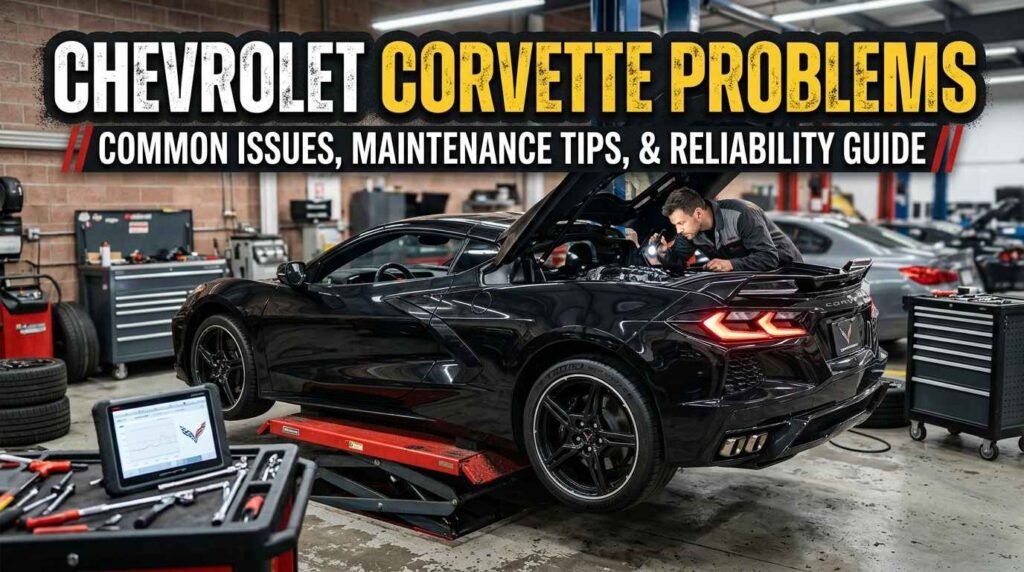
The Chevrolet Corvette is famous for its powerful engines, sharp handling, and unmistakable sports-car design.
However, owning one is not always as exciting as driving it. Like any performance car, a Corvette can develop mechanical problems, electrical faults, and expensive issues as it ages.
If you own a Corvette or plan to buy a used one, understanding its common problems can help you avoid unexpected repair bills. Some issues are relatively minor, while others may require extensive diagnosis and costly repairs.
The important thing is to know which symptoms deserve attention, which model years need closer inspection, and how to tell the difference between normal wear and a potentially serious fault.
In this guide, we will explore common Chevrolet Corvette problems across different generations, discuss repair considerations, and explain what to check before buying a used Corvette.
Are Chevrolet Corvettes Reliable?

Chevrolet Corvettes can provide years of enjoyable driving when owners maintain them properly. However, reliability varies by generation, model year, engine, transmission, mileage, and previous maintenance.
A carefully maintained Corvette with higher mileage may be a better purchase than a low-mileage example that has spent years neglected in a garage. Service records, driving history, and a professional inspection often reveal more than the odometer alone.
Corvettes also require a different ownership mindset from ordinary commuter cars. Performance tires, specialized components, powerful engines, and advanced transmissions can increase maintenance and repair costs.
For example, a buyer considering a C7 Corvette should investigate reported transmission complaints and check how the car behaves during a road test. Someone shopping for an older C6 should pay close attention to engine condition, cooling performance, fuel-gauge accuracy, and signs of previous repairs.
The bottom line: A Corvette is not automatically unreliable, but buying one without checking its specific weaknesses can turn an exciting purchase into an expensive mistake.
Read Also: Ford Mustang GT Problems: Common Issues, Reliability, and Repair Costs

What Are the Most Common Chevrolet Corvette Problems?
Corvette problems differ between generations, but several areas deserve attention when inspecting or maintaining one.
1. Engine and Valvetrain Problems
Engine problems can range from minor oil leaks to serious internal mechanical faults. Abnormal ticking, misfires, rough idling, and unexplained oil consumption are symptoms worth investigating.
Not every engine noise signals a major failure. Some noises may come from normal component operation, exhaust leaks, or accessory components. However, persistent knocking, worsening ticking, or a sudden change in engine sound should never be ignored.
Certain Corvette engines also have specific concerns. For example, the LS7 V8 used in the C6 Z06 has been associated with valve-guide and valvetrain concerns. This issue should not be confused with a defect affecting every Corvette engine.
What should you do?
- Check the oil level and maintenance records.
- Look for oil leaks around the engine.
- Pay attention to unusual noises during cold starts and after the engine warms up.
- Have persistent misfires or abnormal mechanical sounds professionally diagnosed.
- Ask for a compression test or other appropriate engine tests when the inspection findings justify them.
Imagine finding a used C6 Z06 with a strong engine and an attractive price. If the seller cannot provide maintenance records and the engine produces unusual valvetrain noise, arrange a specialist inspection before committing to the purchase.
A thorough inspection may cost less than discovering a serious engine problem after the sale.
2. Transmission Problems
Transmission concerns are another important topic for Corvette owners, particularly buyers researching certain C7 models equipped with the eight-speed automatic transmission.
Some owners have reported shuddering, vibration, or inconsistent shifting. These symptoms can have different causes, so a driver should not assume that every vibration means the transmission needs replacement.
Transmission fluid condition, operating temperature, control-system behavior, and the vehicle’s service history can all influence the diagnosis.
A C8 Corvette uses a dual-clutch transmission, which operates differently from a traditional automatic transmission. Buyers should evaluate its behavior according to the manufacturer’s specifications rather than expecting every shift to feel identical to a conventional automatic.
Warning signs to investigate include:
- Shuddering during steady acceleration.
- Delayed engagement when selecting a gear.
- Unexpected slipping or loss of drive.
- Harsh shifts that differ from the vehicle’s normal behavior.
- Transmission warning messages.
If you notice these symptoms during a test drive, record when they occur and have the vehicle scanned and inspected by a qualified technician.
Do not approve a major transmission repair based on a vague description of the problem. Request a clear diagnosis and an explanation of the available repair options first.
3. Fuel-Level Sensor Problems
An inaccurate fuel gauge can make everyday driving frustrating. You might fill the tank and notice that the gauge still reads low, or the displayed fuel level may change unexpectedly.
Fuel-level sensor faults are among the reported Chevrolet Corvette problems listed by repair-information sources. However, faulty wiring, electrical connections, or other fuel-system issues can produce similar symptoms.
A faulty gauge is more than a convenience problem. If you cannot trust the displayed fuel level, you could run out of fuel unexpectedly.
What should you check?
- Observe whether the gauge changes consistently after refueling.
- Note whether the problem occurs intermittently or all the time.
- Ask a technician to check the sensor circuit and relevant diagnostic codes.
- Avoid replacing the sensor until the fault has been confirmed.
For example, if your Corvette’s fuel gauge suddenly drops toward empty shortly after filling the tank, do not assume the fuel pump has failed. A proper diagnosis can help distinguish a sensor problem from a more complicated fuel-system fault.
If you smell gasoline or suspect an actual fuel leak, treat the situation as a safety issue. Stop driving, avoid ignition sources, and arrange professional assistance.
4. Electrical Problems and Battery Drain
Electrical problems can be difficult to diagnose because one underlying fault may trigger several unrelated-looking symptoms.
A Corvette might display warning messages, lose battery charge during storage, or develop intermittent problems with electronic accessories. The battery itself may be weak, the charging system may be faulty, or an electrical circuit may continue drawing power when the car is switched off.
Modern vehicles also contain control modules that can complicate diagnosis if technicians rely on guesswork instead of testing.
Common warning signs include:
- A battery that repeatedly goes flat.
- Slow engine cranking.
- Intermittent warning lights.
- Electronic features that stop working unexpectedly.
- Starting problems after the car has been parked for several days.
Start with a battery and charging-system test. If those components are healthy, a technician can investigate parasitic battery drain or inspect the affected electrical circuits.
For example, if your Corvette starts normally after a long drive but struggles to start the next morning, replacing the battery immediately may not solve the problem. The vehicle could have an electrical drain that continues while parked.
This is especially worth checking if you store your Corvette for long periods during winter or use it only on weekends.
5. Steering, Suspension, Wheels, and Tires
A Corvette’s performance-focused design puts considerable importance on wheel condition, suspension health, and tire quality.
Cracked or bent wheels, damaged tires, worn suspension components, and alignment problems can affect handling and ride quality. Some owners may first notice a vibration through the steering wheel or unusual tire wear.
Wheel damage deserves particular attention on performance models because low-profile tires provide less cushioning against potholes and sharp road impacts.
Look for these symptoms:
- Steering-wheel vibration at certain speeds.
- Uneven tire wear.
- Pulling to one side on a suitable, level road.
- Visible wheel cracks or bends.
- Knocking noises over bumps.
- Changes in handling or steering response.
A 2017 Corvette, for example, has been associated with cracked-rim complaints in vehicle complaint databases. That makes wheel inspection worthwhile, but it does not mean every 2017 model has damaged wheels.
During a used-car inspection, check all four wheels carefully and look for evidence of previous repairs. Have a qualified shop assess any suspected structural damage before driving the vehicle at speed.
Do not dismiss a vibration as a simple balancing issue until the wheels, tires, and suspension have been checked.
6. Cooling-System Problems and Overheating
A high-performance engine needs an effective cooling system, especially when driven hard or in hot weather.
Cooling problems can develop because of coolant leaks, damaged hoses, a malfunctioning thermostat, radiator issues, or problems with cooling fans and related components.
The exact cause depends on the model and symptoms. A rising temperature reading does not automatically mean the radiator has failed.
Watch for:
- Engine temperature rising beyond its normal range.
- Coolant warning messages.
- Visible coolant leaks.
- A sweet smell associated with leaking coolant.
- Repeated coolant loss.
- Steam coming from the engine compartment.
Check coolant levels only when it is safe to do so and the engine has cooled. Never remove a pressurized cooling-system cap while the engine is hot.
If the Corvette overheats, pull over safely and switch off the engine when appropriate. Continuing to drive an overheating car can turn a relatively manageable cooling fault into serious engine damage.
Owners who regularly drive on a track should pay particular attention to cooling performance and follow the maintenance requirements for their specific model.
7. Harmonic Balancer Problems
The harmonic balancer helps control crankshaft torsional vibrations. When it develops a fault, the engine may exhibit vibration, unusual noises, or visible movement at the pulley.
Harmonic-balancer concerns are often discussed in relation to certain C6 Corvettes, although the presence and severity of a problem depend on the specific engine and vehicle condition.
Potential warning signs include:
- Unusual vibration from the engine.
- A pulley that appears to wobble.
- Abnormal belt movement.
- Unusual noises near the front of the engine.
Do not attempt to diagnose this issue by reaching near a running engine or moving belts. A technician can inspect the component safely and determine whether the balancer, belt system, or another part is responsible.
If a used C6 has unexplained engine vibration, ask the seller whether the harmonic balancer has been inspected or replaced and request supporting service records.
8. Interior Electronics and Convenience Features
Not every Corvette problem affects performance. Depending on the generation, owners may experience problems with electronic displays, infotainment features, power accessories, sensors, or other convenience systems.
An intermittent feature can be frustrating, particularly when the car has advanced electronics that are expensive to diagnose.
Before buying a used Corvette, test the features fitted to that particular vehicle. Do not assume that a working engine and transmission mean every other system is in good condition.
Check the displays, climate controls, windows, locks, lights, camera systems, and other installed equipment. Investigate warning messages rather than assuming that they are harmless.
A small electrical fault may be relatively straightforward to fix, but an intermittent problem involving wiring or control modules can take more diagnostic time than expected.
Chevrolet Corvette Problems by Generation
Not every Corvette shares the same weaknesses. Chevrolet has changed the Corvette’s engines, transmissions, electronics, and overall design over several decades.
Understanding the differences between generations helps you focus on the right inspection points instead of worrying about every problem ever reported.
C4 Corvette Problems (1984–1996)
The C4 is an older generation, so age-related wear deserves particular attention. Even a car with relatively low mileage may have deteriorated seals, aging electrical connections, or components affected by years of storage.
Potential inspection areas include:
- Aging sensors and electrical components.
- Fuel-level gauge accuracy.
- Coolant leaks and deteriorated hoses.
- Worn suspension components and rubber bushings.
- Evidence of previous repairs or long-term neglect.
If you are considering a C4, pay attention to how consistently the engine starts, whether the temperature remains stable, and whether the dashboard displays reliable information.
A well-maintained C4 can be an enjoyable classic sports car, but buying one based on appearance alone is risky.
C5 Corvette Problems (1997–2004)
The C5 introduced a more modern Corvette platform, but age and specific component concerns still deserve attention.
Potential inspection areas include:
- Fuel-level sensor problems.
- Steering-column lock concerns on applicable models.
- Battery, grounding, and electrical issues.
- Suspension wear and fluid leaks.
- Roof-panel fit and water intrusion on relevant body styles.
Steering-column lock concerns should be investigated according to the exact model year and equipment. Do not assume every C5 has the same fault or that a particular repair applies to every car.
Before buying one, check the service history, scan for diagnostic codes, and confirm that any applicable recall or service campaign has been addressed.
C6 Corvette Problems (2005–2013)
The C6 remains attractive to buyers who want a traditional front-engine Corvette with strong V8 performance. However, some engine-specific concerns can become expensive if ignored.
Areas worth checking include:
- Harmonic balancer condition.
- Fuel-level sensor operation.
- Electrical connections and battery health.
- Cooling-system condition.
- LS7-specific valvetrain concerns on the Z06.
The LS7 issue deserves special attention because the Z06’s engine differs from the V8 engines fitted to other C6 models. Buyers should not assume that an issue reported on one engine automatically applies to every C6.
For example, if a C6 Z06 has incomplete service records and develops persistent engine ticking, a specialist inspection is a sensible next step before purchase.
C7 Corvette Problems (2014–2019)
The C7 offers strong performance and modern features, but certain reported problems deserve attention during a used-car inspection.
Two notable areas are wheel damage and transmission complaints involving applicable eight-speed automatic models.
Check for:
- Cracked or bent wheels, especially on performance-oriented trims.
- Transmission shuddering or abnormal shifts.
- Engine-specific concerns and maintenance history.
- Battery or electronic-system faults.
- Suspension wear and signs of hard driving.
A Grand Sport or Z06 that has been driven aggressively deserves a particularly careful wheel, tire, brake, and suspension inspection.
During the test drive, let the transmission reach normal operating conditions and pay attention to unusual vibration or shifting behavior. If something feels wrong, have it diagnosed rather than assuming that it is normal for a performance car.
C8 Corvette Problems (2020 Onward)
The C8 changed the Corvette’s traditional layout by moving the engine behind the driver. It also introduced a dual-clutch transmission, making its mechanical systems different from those of earlier generations.
Potential concerns to investigate include:
- Model-year-specific transmission complaints and software updates.
- Electrical and battery-related issues.
- Cooling-system performance.
- Power-operated roof or lift-system operation where fitted.
- Recall eligibility and completed service campaigns.
Early production vehicles can have issues that later models address through revised components or software. However, that does not mean every early C8 is problematic or that every newer model is trouble-free.
Before purchasing a used C8, check its VIN for open recalls, ask about software updates and dealer service history, and test the vehicle’s features carefully.
Chevrolet Corvette Problems by Model Year: Which Years Need Extra Research?
People often search for the worst Corvette years because they want to avoid an expensive mistake. However, there is no single model-year ranking that can tell you whether every individual car is a bad purchase.
Complaint databases provide useful clues, but raw complaint counts do not account for every difference in sales volume, mileage, vehicle age, or reporting behavior.
Instead of automatically avoiding a particular year, investigate the faults associated with the specific vehicle you are considering.
| Model year or group | What to investigate |
|---|---|
| 1990s C4 and C5 models | Age-related wear, electrical condition, fuel-gauge operation, and service history |
| 2005–2013 C6 | Harmonic balancer condition, fuel-system concerns, and engine-specific inspection needs |
| 2014–2019 C7 | Wheel condition and automatic-transmission behavior on applicable models |
| 2020 C8 | First-year service history, software updates, and VIN-specific recall checks |
| Later C8 models | Applicable recalls, transmission behavior, and documented repair history |
These are inspection priorities, not a definitive ranking of the worst years.
For a more evidence-based comparison, review NHTSA complaint and recall information alongside model-specific repair records. A vehicle with a documented repair history may be a better choice than another example of the same year with unresolved faults.
How Much Does It Cost to Fix Common Chevrolet Corvette Problems?
Corvette repair costs vary considerably. A small electrical diagnosis may cost relatively little, while accessing a component inside the fuel tank or repairing a major drivetrain fault can require substantial labor.
RepairPal reports an average annual repair cost of approximately $737 for the Chevrolet Corvette. This is a broad ownership estimate, not a guarantee of what any particular owner will spend. A single major repair can exceed that amount. See RepairPal’s Corvette repair and maintenance guide.
Here are some important cost considerations:
| Repair or problem | What affects the cost? |
|---|---|
| Fuel-level sensor failure | Model year, component design, tank access, and labor |
| Harmonic balancer | Parts, labor, and whether related components are damaged |
| Transmission shudder | Diagnostic work, fluid condition, software, and internal damage |
| Engine or valvetrain fault | Engine type, diagnostic results, and the extent of damage |
| Cracked wheel | Wheel design, replacement availability, and tire condition |
| Battery drain | Battery condition, charging-system faults, and electrical diagnosis |
Fuel-level sensor replacement illustrates why model year matters. RepairPal’s estimates have varied significantly across Corvette years, with estimates for some recent models reaching several thousand dollars. Check the estimate for the exact year and confirm it with a repair shop before budgeting. View Corvette fuel-level sensor estimates.
When comparing repair quotes, ask whether the estimate includes parts, labor, diagnostic fees, taxes, and any related repairs. A low initial quote may not cover everything required to fix the underlying problem.
A useful rule: Diagnose first, compare estimates second, and authorize expensive repairs only after you understand what has failed and why.
Warning Signs Corvette Owners Should Never Ignore
Some problems allow you to arrange an inspection soon. Others require immediate action because continuing to drive could create a safety risk or cause further damage.
Stop driving and seek assistance when:
- You suspect a fuel leak.
- The engine overheats severely.
- You experience a sudden loss of braking or steering assistance.
- A serious engine noise appears alongside a warning light or loss of power.
- The vehicle develops a major transmission fault that affects safe operation.
Arrange prompt diagnosis when:
- The transmission repeatedly shudders or shifts abnormally.
- The battery repeatedly loses charge.
- The engine develops persistent ticking or misfires.
- Coolant levels keep dropping.
- Warning lights return after restarting the car.
For example, a brief electronic warning that disappears may require a different diagnostic approach from an overheating engine that loses power. The key is to consider the symptoms together rather than judging the problem by the dashboard light alone.
If the car is unsafe to operate, arrange towing instead of driving it to a repair shop.
How to Check Chevrolet Corvette Recalls and Technical Service Bulletins
A recall check is an important part of Corvette ownership, especially if you are purchasing a used model.
However, recalls, technical service bulletins, and owner complaints are not interchangeable.
- Safety recall: A defined safety-related defect or regulatory noncompliance addressed through an official recall campaign.
- Technical service bulletin: Manufacturer guidance to technicians about diagnosing or repairing a specific condition.
- Owner complaint: A report of an individual’s experience that may help identify a pattern but does not establish a confirmed defect.
- Special coverage: A manufacturer program that may cover certain repairs under specific conditions.
To check your Corvette:
- Find the vehicle identification number (VIN).
- Enter it into the official NHTSA recall lookup.
- Review any outstanding recalls.
- Ask a Chevrolet dealer whether applicable repairs or service campaigns have been completed.
- Keep the repair documentation with your vehicle’s records.
Do not assume that every technical bulletin qualifies you for a free repair. Coverage depends on the program, vehicle, mileage, date, and applicable terms.
Used Chevrolet Corvette Buying Checklist
Buying a used Corvette is much easier when you know what to inspect before negotiating the price.
Use this checklist when visiting a dealership or private seller.
- Review the service history. Look for regular maintenance, documented repairs, and unexplained gaps in the records.
- Check the VIN. Verify recall status and compare the VIN with the vehicle’s paperwork.
- Scan the car for diagnostic codes. A specialist can check relevant control modules for stored faults.
- Inspect the engine. Look for leaks, abnormal noises, rough running, and evidence of poor maintenance.
- Test the transmission. Pay attention to unusual shuddering, slipping, harsh engagement, or delayed response.
- Check all wheels and tires. Look for cracks, bends, uneven wear, and damage from potholes.
- Test the electrical features. Check the battery, displays, climate controls, windows, lights, and other installed equipment.
- Inspect the cooling system. Look for coolant loss, damaged hoses, and signs of overheating.
- Review modifications and accident history. Ask whether the car has been tuned, tracked, or repaired after a collision.
- Arrange a specialist inspection. Have a Corvette-experienced technician assess any expensive or uncertain issue before purchase.
A seller who refuses an independent inspection deserves extra caution.
Should You Buy a Corvette With Known Problems?
Not necessarily. A Corvette with a minor, well-diagnosed fault may still be worth buying if the price reflects the repair and the rest of the vehicle is in good condition.
However, an unexplained engine noise, suspected transmission damage, fuel leak, or questionable structural repair deserves more caution.
Before making an offer, obtain a written repair estimate and subtract the expected repair expense from your buying budget. Leave room for additional costs if the diagnosis remains uncertain.
If the seller will not allow a reasonable inspection, walking away may be the smarter financial decision.
How to Prevent Common Chevrolet Corvette Problems
You cannot prevent every mechanical failure, but sensible maintenance can reduce avoidable problems and help you spot developing faults early.
Follow the correct maintenance schedule
Use the maintenance schedule for your Corvette’s exact model year and engine. Follow the specified fluid requirements and service intervals rather than relying on a generic schedule for all generations.
Investigate unusual symptoms early
A new vibration, unexplained fluid loss, or repeated warning message deserves attention. Finding the cause early may prevent further damage and help you avoid replacing unrelated parts.
Maintain the battery during storage
If you drive your Corvette occasionally, check battery health and follow the manufacturer’s guidance for long-term storage. Use an appropriate battery maintainer when recommended and compatible with the vehicle.
Inspect wheels and tires regularly
Check tire pressure, tread wear, and visible wheel damage. Address vibration or unusual steering behavior promptly, particularly if you drive on rough roads.
Keep service records
Save repair invoices, inspection reports, recall-completion records, and maintenance receipts. These documents help technicians diagnose recurring problems and can improve buyer confidence when you eventually sell the vehicle.
Use a qualified specialist
A technician familiar with Corvette engines, transmissions, and electronics may identify a problem more efficiently than a general repair shop that rarely works on performance cars.
Preventive maintenance will not eliminate every fault, but it gives you a clearer picture of the vehicle’s condition and reduces the chance of being surprised by avoidable repairs.
Frequently Asked Questions About Chevrolet Corvette Problems
What are the most common Chevrolet Corvette problems?
Reported issues include fuel-level sensor failures, electrical and battery concerns, wheel damage on certain models, transmission complaints in applicable versions, and engine-specific faults. The most relevant problems depend on the generation, model year, trim, and maintenance history.
Which Corvette generation has the most problems?
There is no universally accepted answer. Complaint counts, repair databases, recalls, and owner reports measure different things. Compare specific years and trims using reliable evidence instead of assuming one generation is always the least reliable.
Are C6 Corvette problems expensive to repair?
Some C6 repairs are manageable, while engine-specific problems or major component failures can be expensive. Harmonic-balancer concerns and LS7-specific valvetrain issues deserve appropriate investigation, particularly when buying a used C6 Z06.
Do C7 Corvettes have transmission problems?
Some C7 models equipped with the eight-speed automatic have received reports of shuddering and abnormal shifting. A proper diagnosis is essential because not every transmission symptom has the same cause or requires a major repair.
Are C8 Corvettes reliable?
C8 reliability depends on model year, condition, maintenance, and individual vehicle history. Early production models and later vehicles may have different service updates or recall considerations, so check the VIN and review documented repairs before buying.
Which Chevrolet Corvette years should buyers research carefully?
Research any year associated with a problem relevant to its engine, transmission, or equipment. Pay particular attention to known C7 wheel and automatic-transmission complaints, C6 engine-specific concerns, and the documented service history of early C8 models. These are inspection priorities, not proof that every vehicle from those years is defective.
Can a Chevrolet Corvette last more than 100,000 miles?
Yes, a properly maintained Corvette can exceed 100,000 miles, although longevity depends on the engine, driving conditions, maintenance, repairs, and previous use. A documented maintenance history and a thorough inspection are more useful than mileage alone.
Is a used Chevrolet Corvette worth buying?
It can be, provided you choose the right vehicle and budget realistically for maintenance. Review its service records, check applicable recalls, inspect the wheels and drivetrain, and obtain an independent pre-purchase inspection before committing.
Final Thoughts
Chevrolet Corvette problems vary widely across generations, and no single list can predict every fault you might encounter. Fuel-system issues, engine concerns, transmission complaints, electrical faults, and wheel damage are all worth understanding, but their relevance depends on the particular vehicle.
If you already own a Corvette, pay attention to changes in engine sound, transmission behavior, temperature, and electrical performance. Address warning signs early and follow the maintenance schedule for your model.
If you are buying a used Corvette, focus on verified repair history, model-specific concerns, recall status, and a professional inspection rather than relying on reputation alone.